Mia Baumann · 12 September 2026
Unlocking Efficiency Through Iterative Feedback Loops in Content Management Systems
Content management systems handle the creation, organization, and distribution of digital material across websites and platforms, and iterative feedback loops provide a structured method for refining those processes over repeated cycles. These loops collect data from users and performance metrics, then feed that information back into adjustments that streamline workflows and reduce repeated errors. Research from academic institutions shows that organizations applying such loops in their CMS environments report measurable gains in output speed and consistency, particularly when teams track revisions against specific benchmarks rather than relying on one-time audits.
Core Mechanics of Feedback Integration
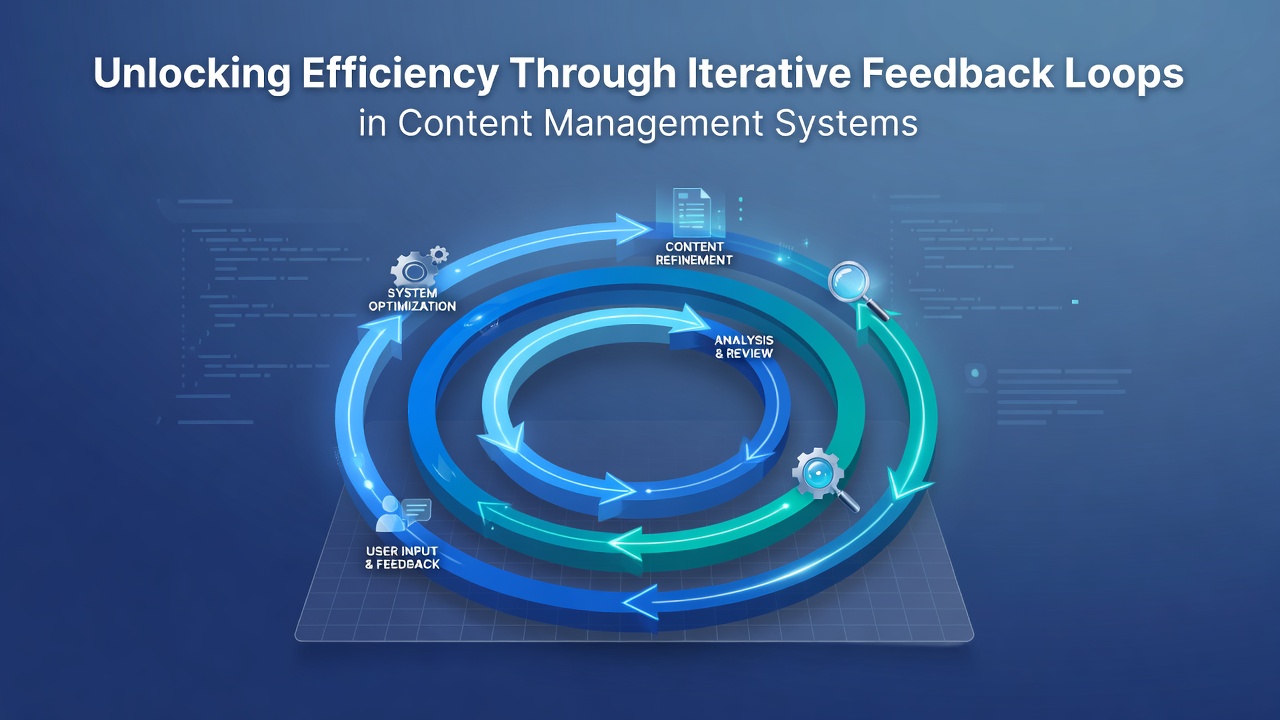
Iterative feedback loops operate through four repeating stages that include data capture, analysis, adjustment, and retesting, all embedded directly into the CMS interface. Teams set triggers that automatically log user interactions such as edit times, approval delays, and engagement rates, then route those logs into dashboards where patterns emerge across multiple content pieces. This approach differs from traditional linear publishing because it treats every published item as a starting point for the next improvement round, and data collected in one cycle directly informs the rules applied in the following round.
Systems built around these loops often incorporate version control features that tag each change with its originating feedback source, allowing later reviewers to trace which user comment or performance dip prompted a specific rewrite. Observers note that this traceability cuts down on redundant edits, since contributors see the full history rather than isolated suggestions. In practice, a marketing team updating product pages might receive automated prompts when bounce rates exceed a threshold, prompting them to revise headlines or images before the next publishing window opens.
Implementation Patterns Across Organizations
Organizations adopt these loops at different scales depending on team size and content volume. Smaller operations begin by adding simple comment fields and analytics exports within existing CMS plugins, while larger enterprises integrate dedicated modules that connect directly to external data warehouses. A study conducted by researchers at an Australian university tracked 12 companies over 18 months and found that those starting with weekly review cycles achieved faster stabilization of content quality scores than groups attempting daily adjustments. The difference appeared because weekly intervals allowed enough data to accumulate for meaningful pattern recognition without overwhelming staff resources.

September 2026 marks the scheduled release of updated interoperability standards from the OECD digital economy reports that include recommended data schemas for feedback collection in enterprise platforms. These standards aim to reduce compatibility issues when organizations combine multiple CMS tools, and early adopters have already begun mapping their internal loops to the proposed formats. Canadian government digital service guidelines also emphasize similar data handling practices for public sector websites, focusing on privacy-compliant collection methods that still support iterative refinement.
Measured Outcomes and Supporting Evidence
Performance tracking reveals several consistent outcomes when feedback loops run continuously inside content systems. Edit cycle times drop because contributors receive targeted suggestions instead of broad revision requests, and overall publishing throughput rises as bottlenecks surface earlier in the process. Figures from industry reports indicate that teams using automated loop triggers cut average approval delays by roughly 30 percent within the first six months of deployment. Error rates in published material also decline when systems flag recurring issues such as missing metadata or broken links before final release.
One documented case involved a European research institution that layered feedback collection onto its publication platform for academic papers. Staff recorded reviewer comments alongside download statistics and citation counts, then adjusted template structures every quarter based on the combined dataset. Over two years the institution reported higher completion rates for submissions and fewer post-publication corrections. The approach worked because the loops connected qualitative feedback with quantitative performance signals, creating a richer dataset than either source provided alone.
Technical Considerations for Sustained Operation
Successful maintenance of these loops requires attention to data storage limits and processing speed within the CMS architecture. Large volumes of interaction logs can slow down page rendering if the system does not archive older records or summarize them into aggregated metrics. Developers therefore design cleanup routines that retain only the most recent cycles while preserving trend summaries for long-term comparison. Security protocols also play a role, since feedback often includes user identifiers that must remain protected under regional privacy regulations.
Integration with external analytics services extends the reach of internal loops by pulling in data from social channels and search engine results. This external input helps teams understand how published content performs after distribution, closing the loop between creation and audience response. Systems that combine both internal and external signals tend to surface efficiency opportunities that remain hidden when teams rely solely on platform-native statistics.
Conclusion
Iterative feedback loops embedded in content management systems deliver efficiency through repeated cycles of collection, analysis, and adjustment that build on each prior round. Evidence from multiple studies and organizational reports confirms that structured application of these loops reduces edit times, improves consistency, and surfaces workflow issues earlier than static review methods. As standards evolve in 2026 and beyond, organizations that align their internal processes with emerging data schemas position themselves to maintain those gains across changing platforms and regulatory environments.